

Zirconia ceramics are advanced ceramic materials based on zirconium dioxide (ZrO₂). They appear white at room temperature and contain trace amounts of hafnium dioxide (HfO₂) and stabilizers such as yttrium oxide (Y₂O₃).
1. Core properties stem from crystal transformations
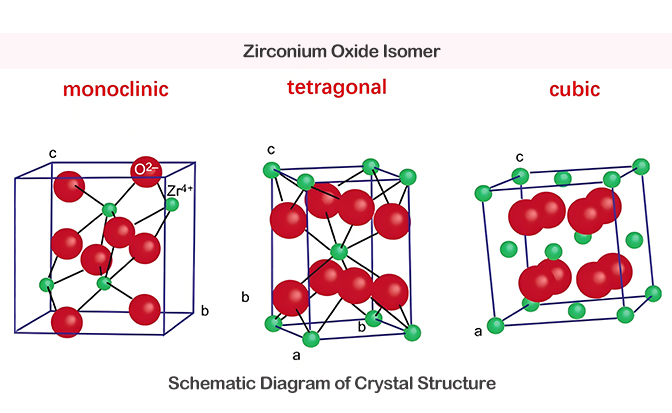
At normal pressure, zirconia ceramics exist in three crystalline states: monoclinic (m-ZrO₂), tetragonal (t-ZrO₂), and cubic (c-ZrO₂). By adding stabilizers such as Y₂O₃ and CeO₂, the crystal structure can be manipulated to form types such as partially stabilized zirconia (PSZ) or tetragonal zirconia polycrystals (TZP). For example, Y-TZP (yttrium-stabilized tetragonal zirconia) is widely used in medical and industrial fields due to its high toughness and strength.
2. Core Differences from Ordinary Ceramics
Mechanical Properties:
Hardness and Wear Resistance: Zirconia ceramics have a hardness of HV1230, making them suitable for high-wear environments (such as bearings and cutting tools).
Toughness and Crack Resistance: Through a phase transformation toughening mechanism, zirconia undergoes a tetragonal to monoclinic phase transition during crack propagation, absorbing energy and preventing crack propagation. Its fracture toughness is 3-5 times that of ordinary ceramics.
Thermal Properties:
Thermal Expansion Coefficient: Close to that of steel (10.5×10⁻⁶/°C), highly compatible with metals, reducing the risk of cracking caused by thermal stress.
Thermal Insulation: Low thermal conductivity (2-3 W/m·K), makes it suitable for high-temperature insulation applications (such as aircraft engine coatings).
Biocompatibility:
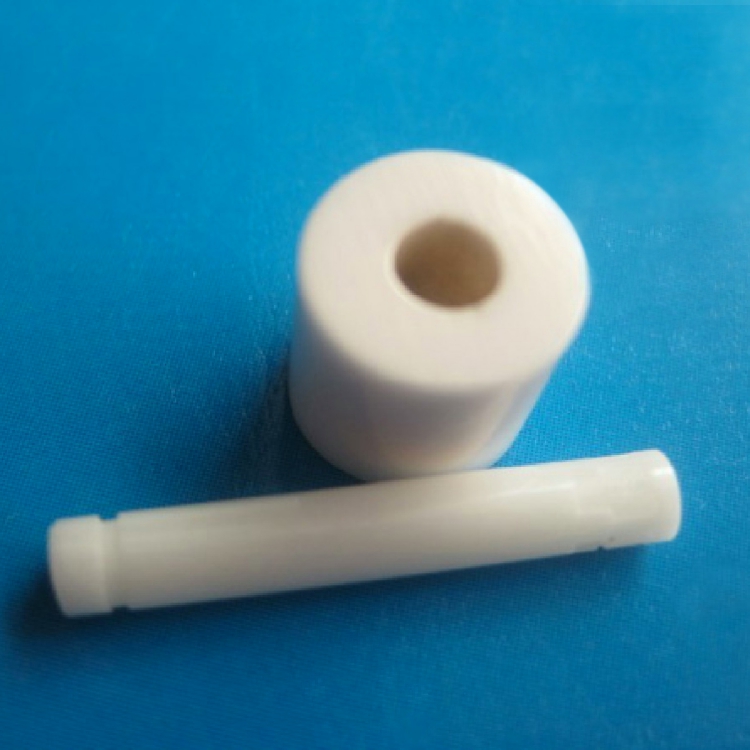
Zirconium oxide ceramics are non-toxic and immune-resistant. They can be polished to a mirror-like finish (Ra < 0.01μm), reducing bacterial adhesion, making them the material of choice for dental implants and artificial joints.
3. Material Advantages
Superior Wear Resistance:
In applications such as pump seals and valve seats, zirconia ceramics have a lifespan 5-10 times that of cemented carbide, significantly reducing replacement frequency and maintenance costs. For example, one oil company saw a 70% reduction in annual maintenance costs after adopting zirconia pump seals.
High-Temperature Stability:
With a melting point as high as 2715°C and maintaining strength at temperatures up to 1500°C, they are suitable for use as electrolytes in solid oxide fuel cells (SOFCs) and high-temperature heating elements.
Adjustable Electrical Properties:
At room temperature, they are an insulator (resistivity > 10¹⁴Ω·cm). At high temperatures, they transform into a semiconductor (resistivity drops to 10²Ω·cm), enabling their use in oxygen sensors and piezoelectric elements.
Combining Aesthetics and Functionality:
Adding colorants such as V₂O₅ and Fe₂O₃ can create a colorful, translucent material that can replace diamonds in jewelry (e.g., cubic zirconia gemstones) while maintaining high hardness.
4. Structural Composition and Processing
Powder Preparation:
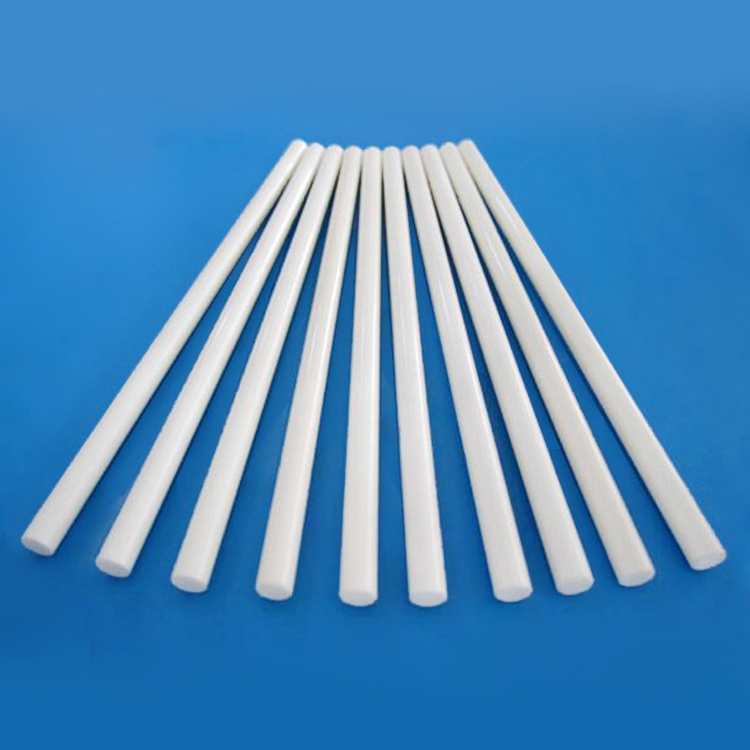
High-purity, ultrafine powders (particle size <100nm) are prepared using co-precipitation, sol-gel, or hydrothermal synthesis methods. This ensures fine grains (<500nm) after sintering, enhancing material strength.
Molding Process:
Slip Casting: Suitable for complex-shaped parts (e.g., artificial joint prostheses), but the green body density is relatively low (requiring subsequent hot isostatic pressing).
Hot Compression Molding: Using a paraffin wax binder, high-precision molding is achieved (dimensional tolerance ±0.05mm), making it suitable for mass production (e.g., watch cases).
Sintering Technology:
Pressureless sintering: Low cost, but lower density (95%-98%);
Hot Isostatic Pressing (HIP): Achieves near-full density (>99.5%) at 1500°C and 200 MPa, significantly improving material performance.
5. Matching Application Scenario with Buyer
Industrial Manufacturing:
Target Customers: Automotive parts suppliers, aerospace companies, and semiconductor equipment manufacturers.
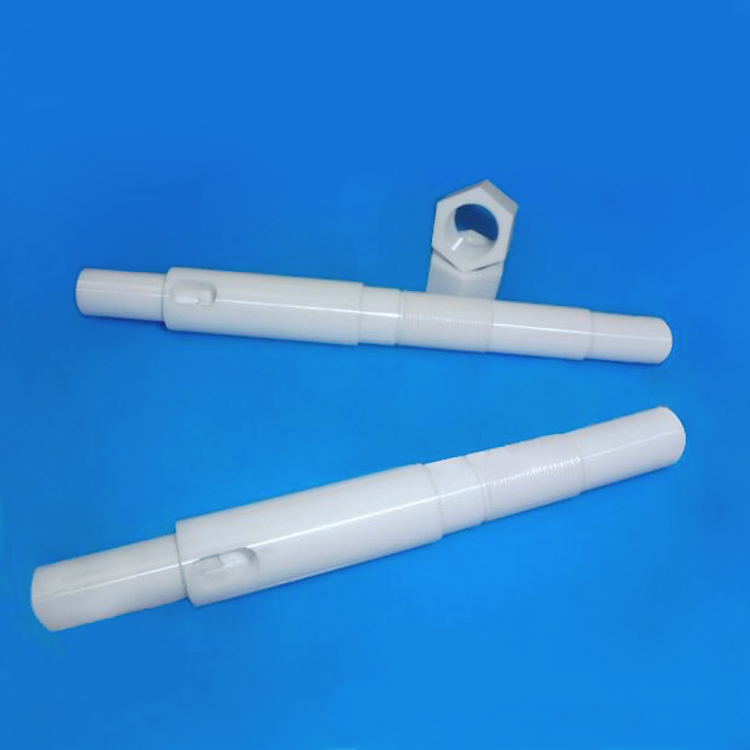
Recommended Products: Zirconia bearings (for high-speed electric spindles), ceramic cutting tools (for cutting materials with a hardness of HRC60 or higher).
Consumer Electronics:
Target Customers: Smartphone manufacturers, wearable device brands.
Recommended Products: Zirconia ceramic back covers and watch cases.
6. Procurement Decision Recommendations
Cost-sensitive customers: Choose zirconia-toughened alumina (ZTA) composites to maintain 80% of zirconia's performance while reducing costs by 30%-50%.
High-end customization customers: Prioritize suppliers with HIP sintering capabilities to ensure material density and consistent performance.
Small-batch trial production customers: Partner with vendors offering 3D printing zirconia services to shorten R&D cycles and reduce tooling costs.